it takes time
a duo exhibition by Laura Matukonytė and Emilija Višinskaitė is a conversation through materials and marks their second meeting within a shared exhibition. In this artistic collaboration, materials become the objects of their research. The exhibition is presented at the Exhibition Hall of the Klaipėda Culture Communication Centre (KKKC).
Curator – Emilija Globytė
Exhibition technician – Kornelijus Pelkys
Sound artist – Richard Hronský
Photography – Ilona Kačerauskienė
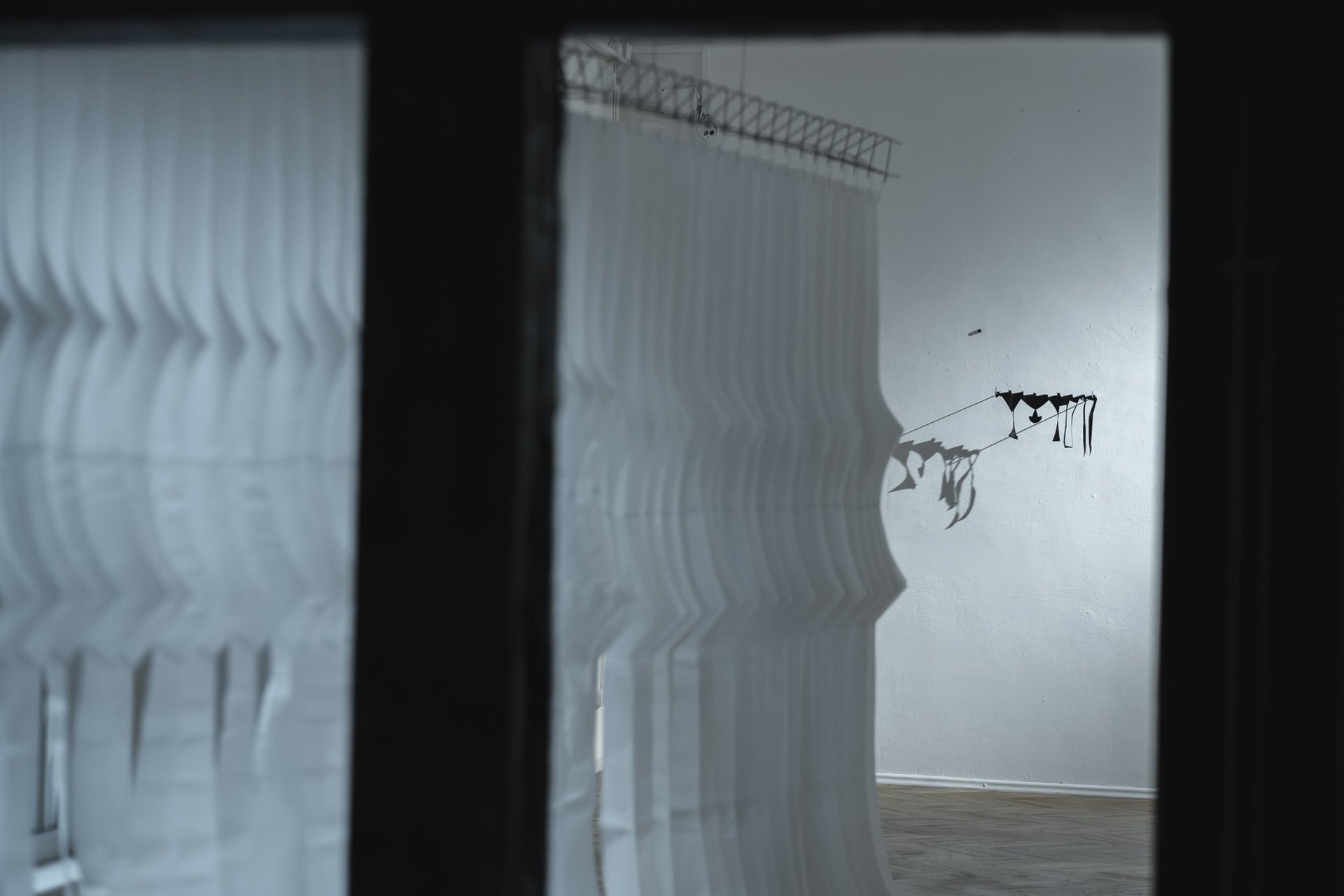
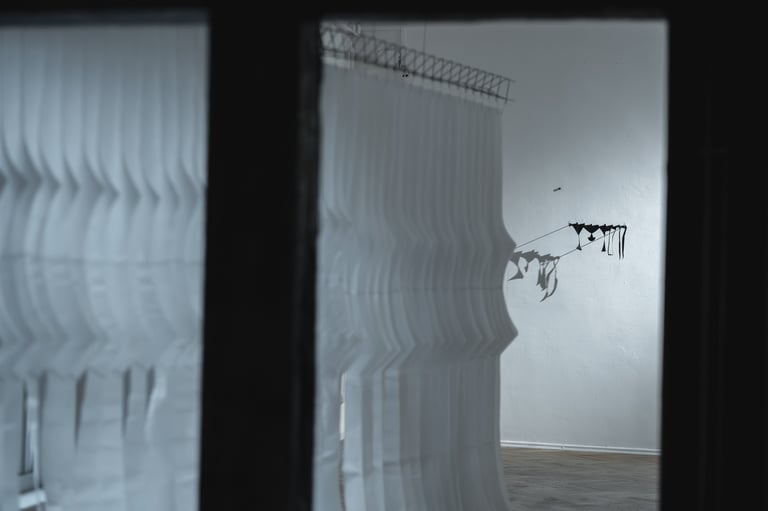
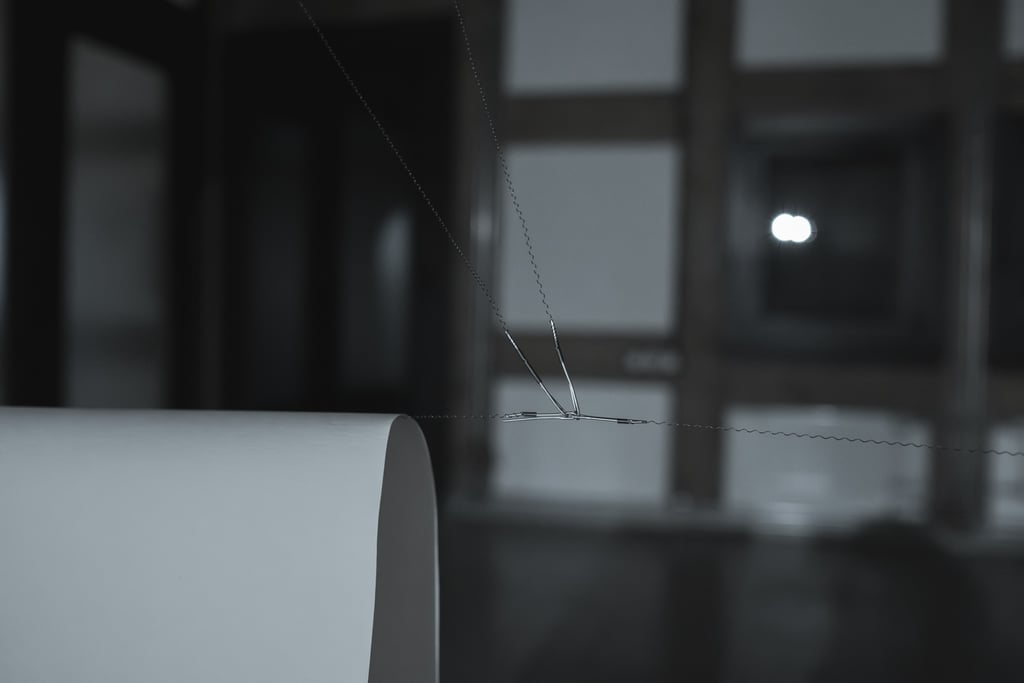
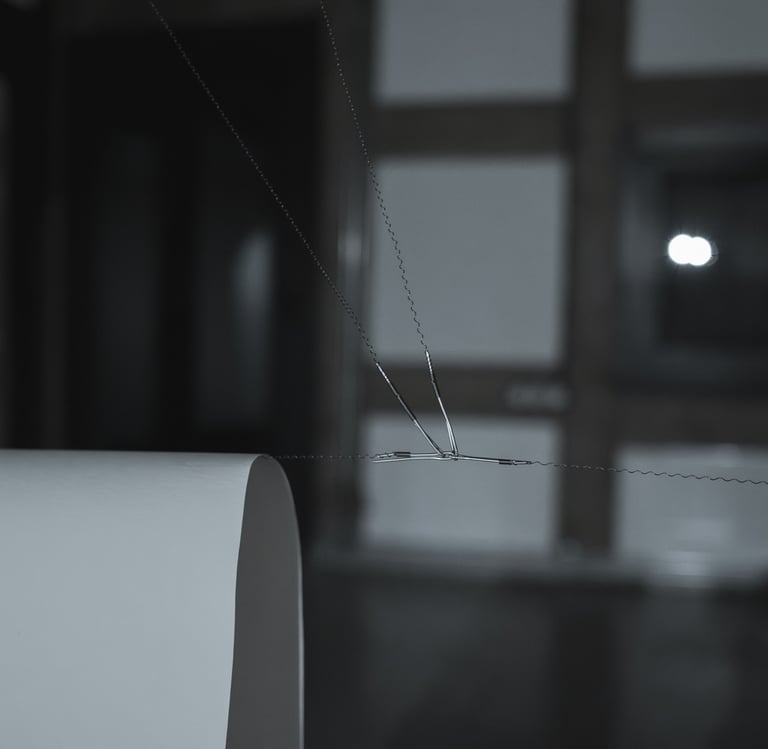
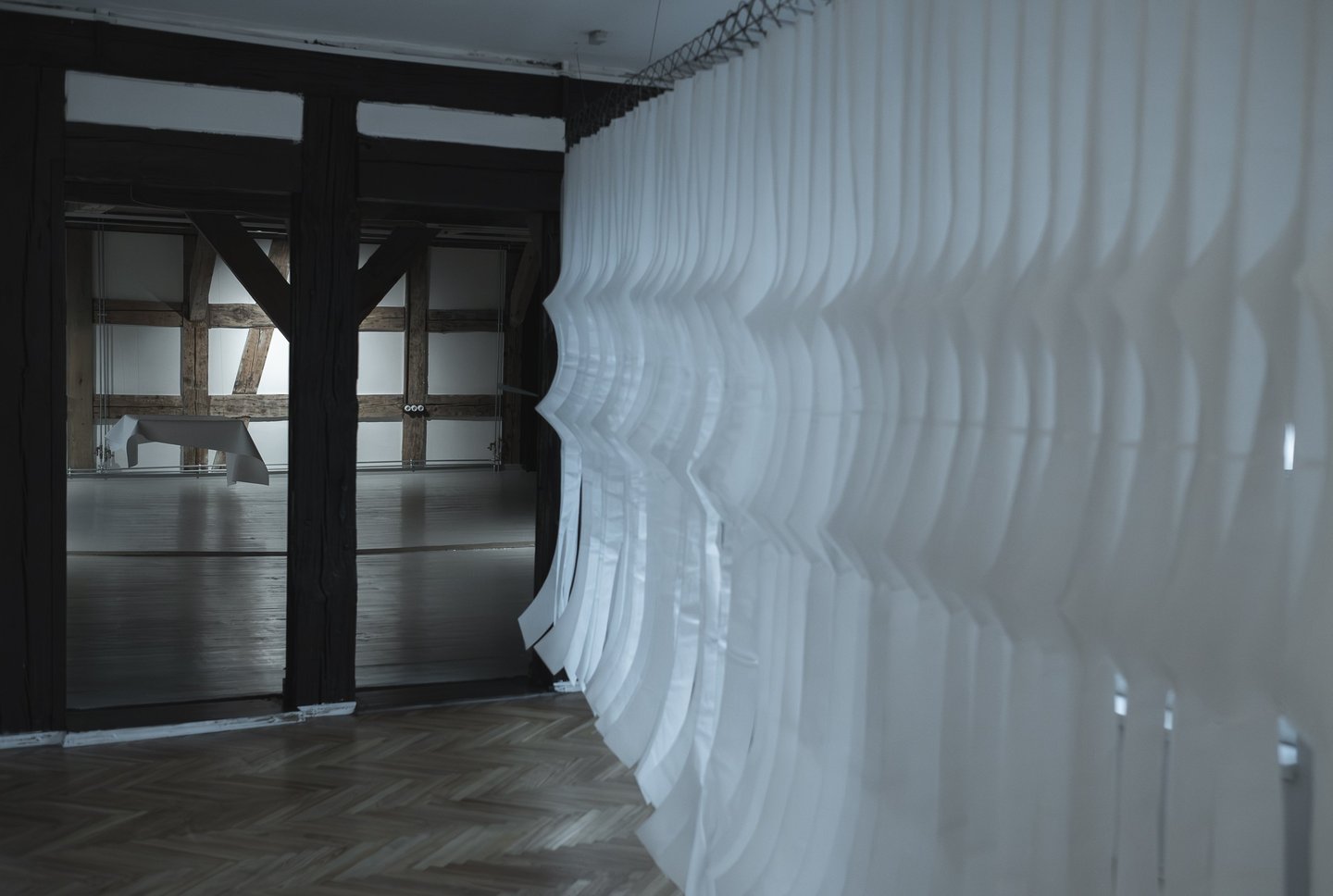
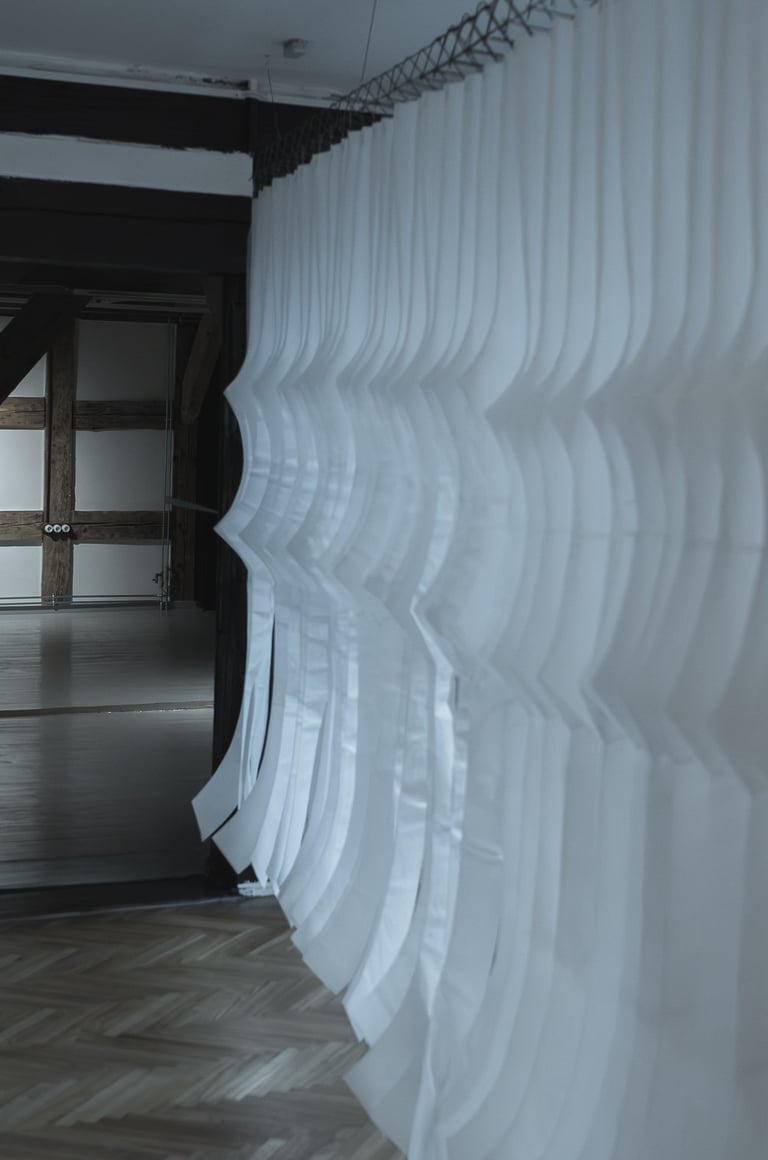
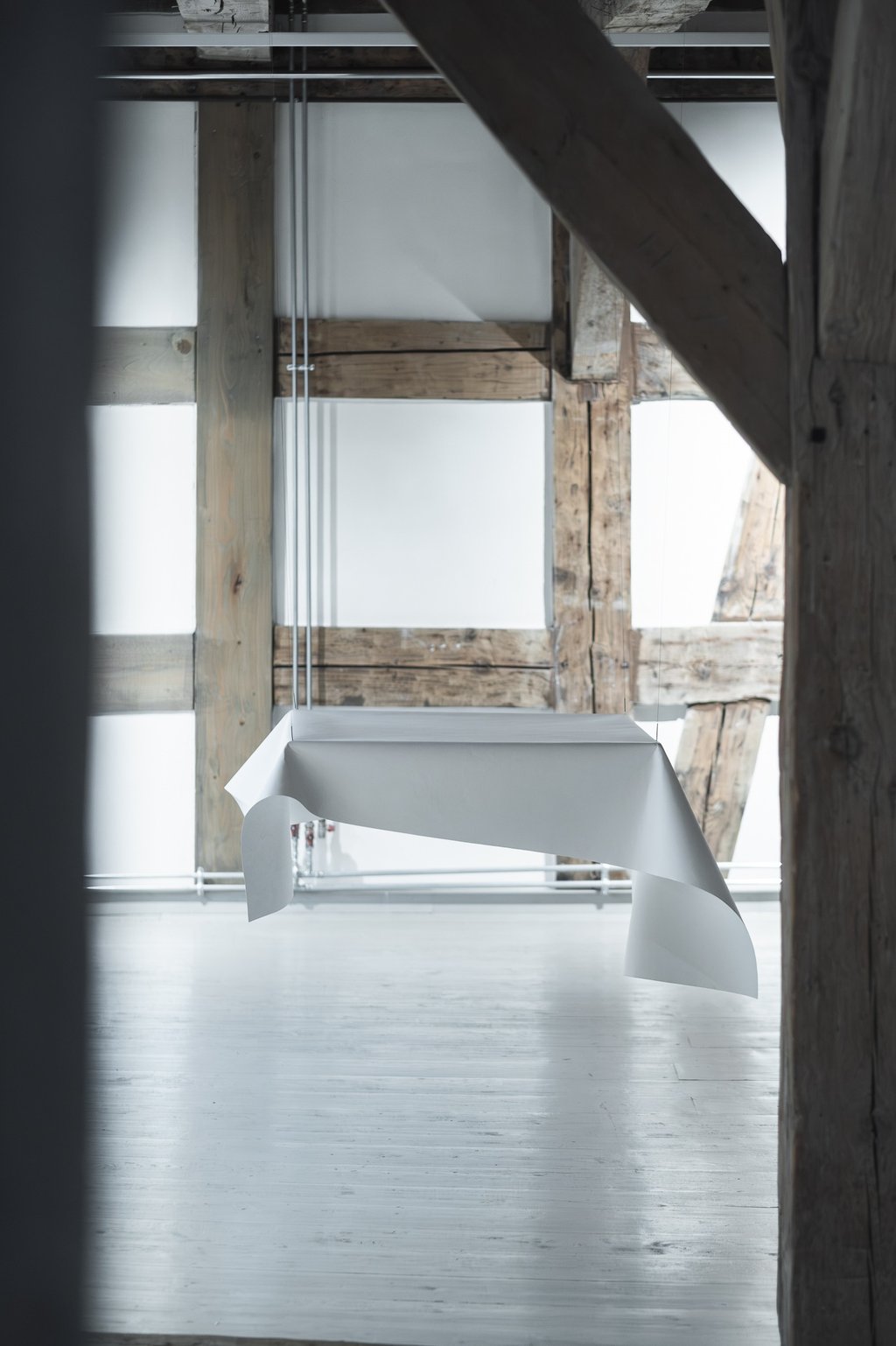
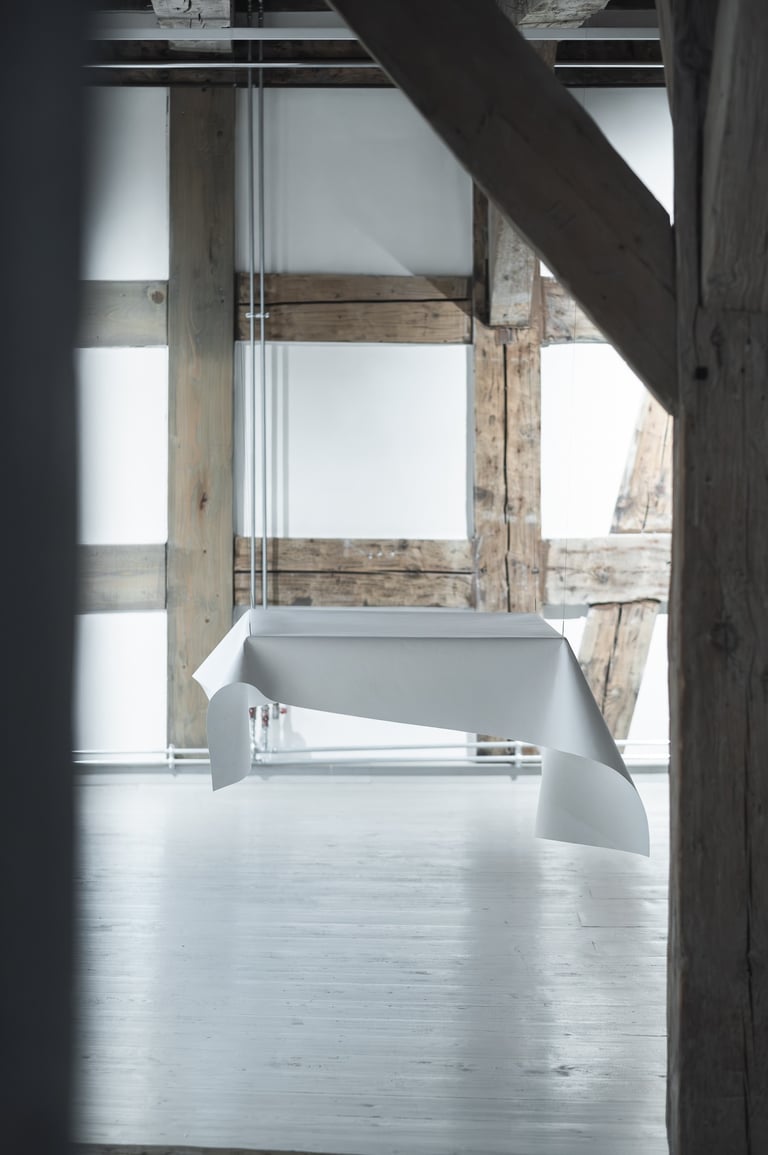
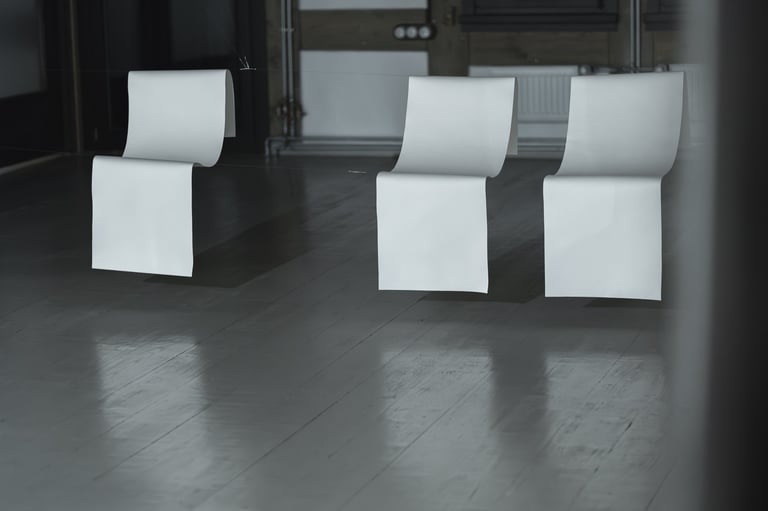
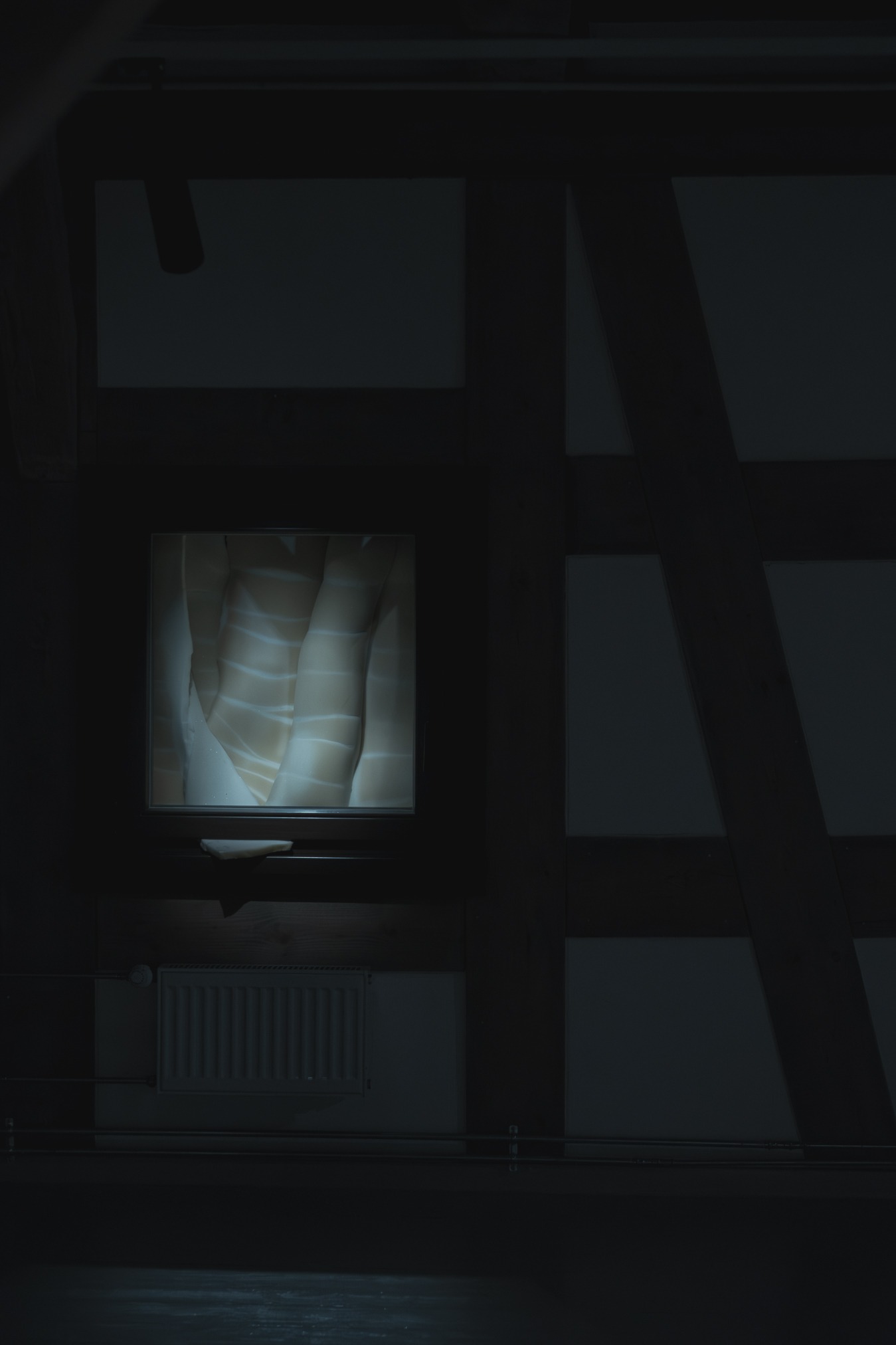
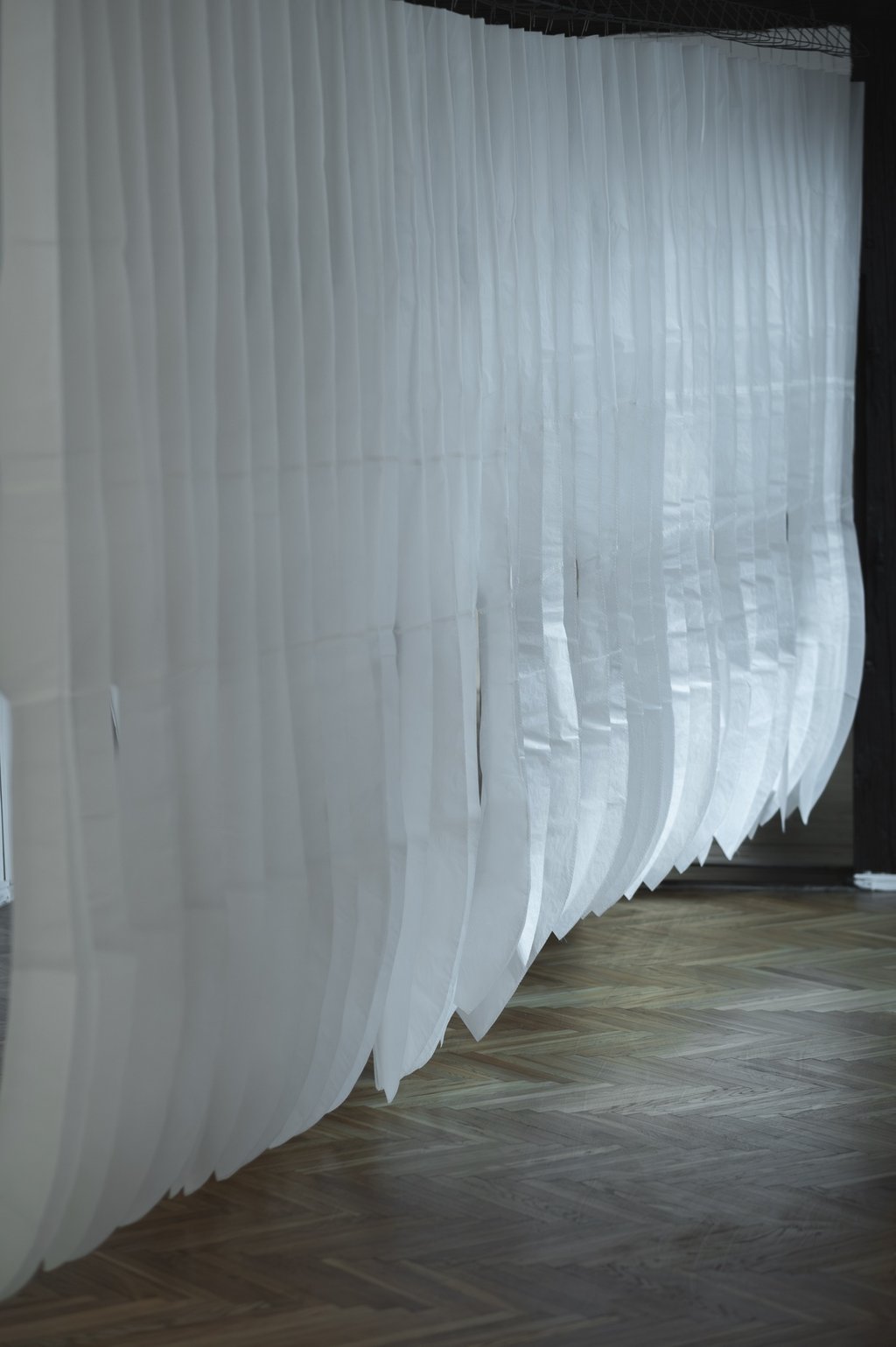
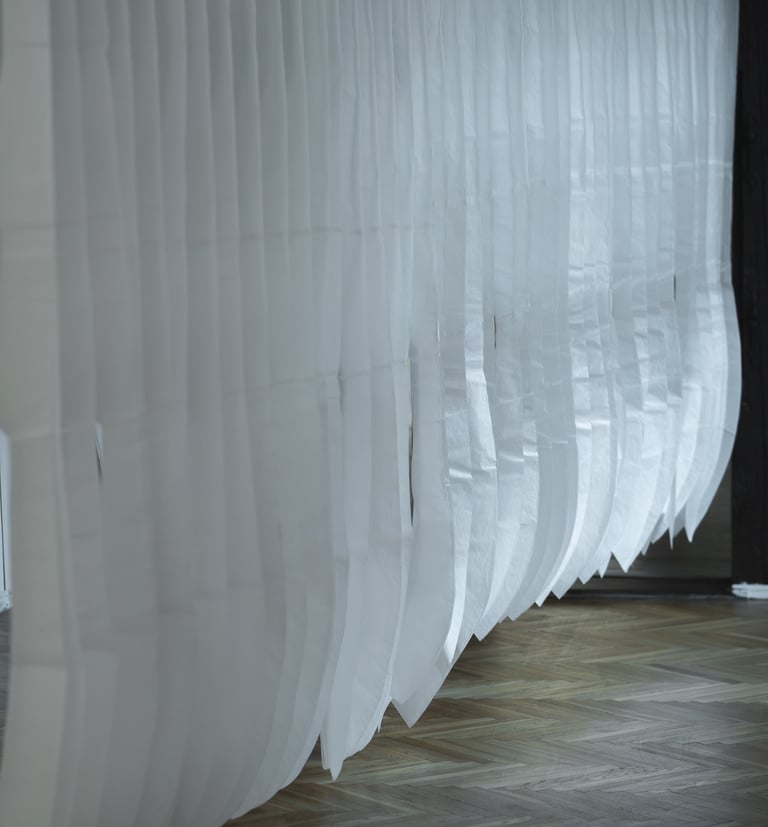
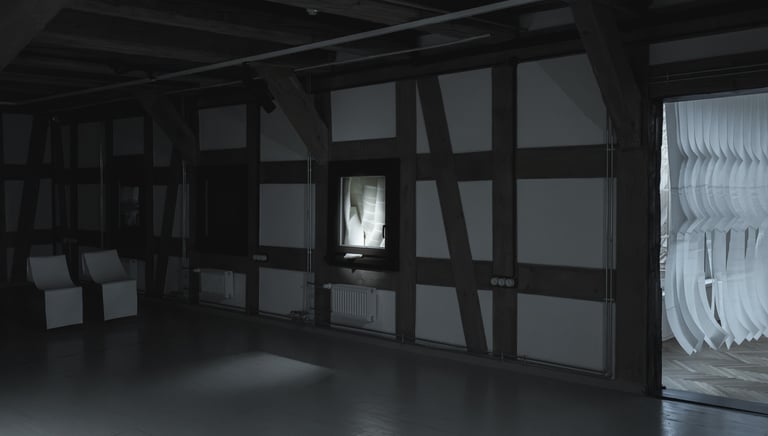
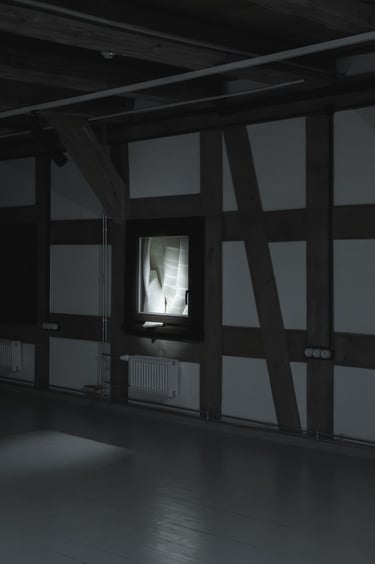
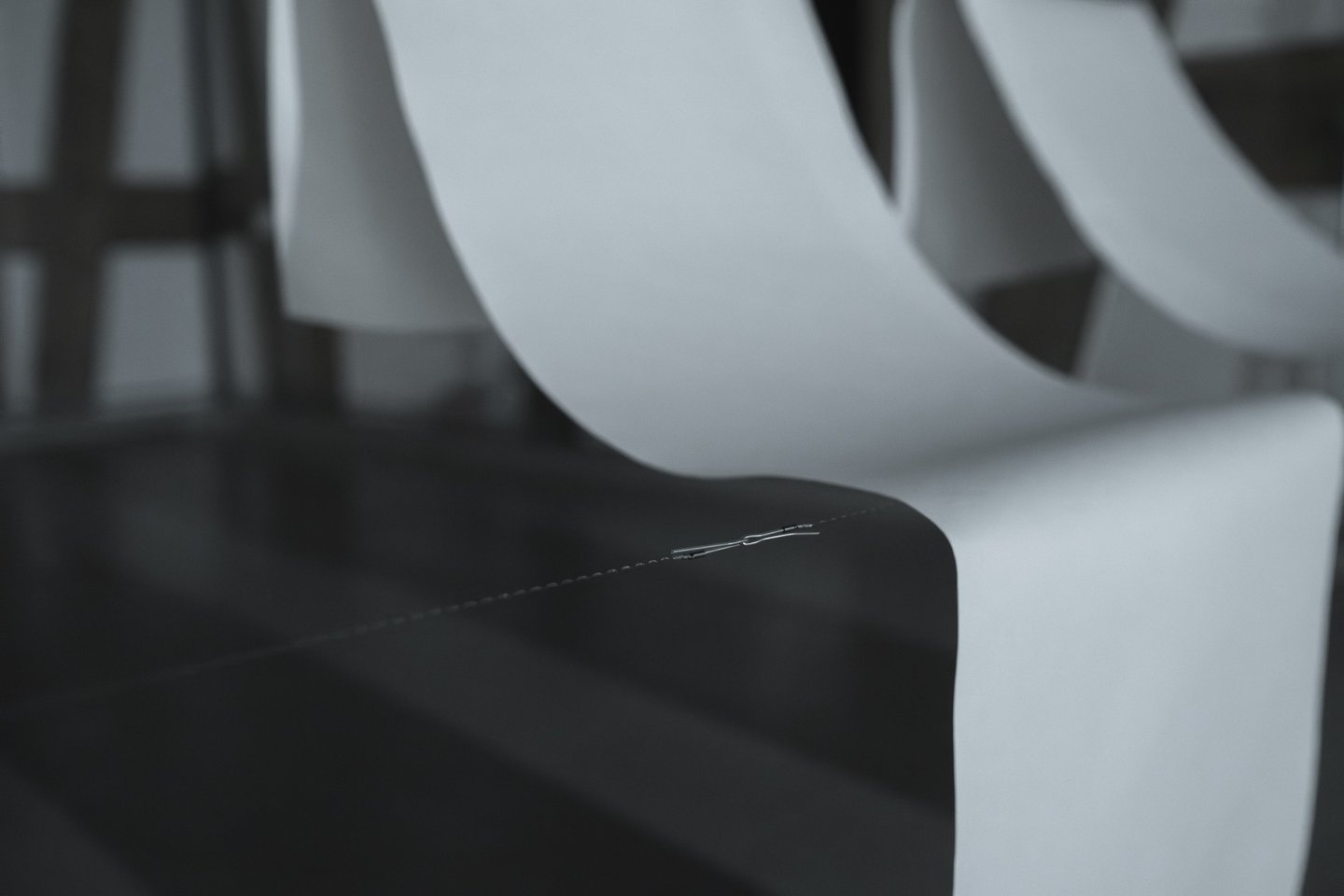
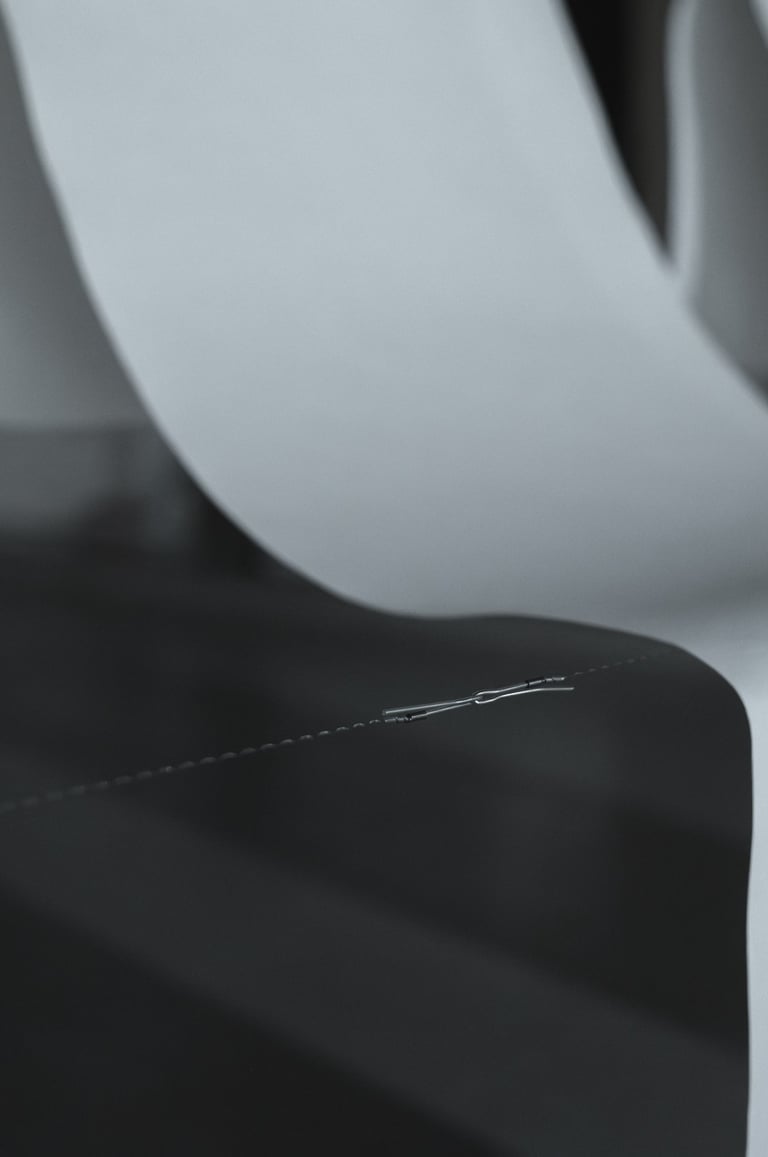
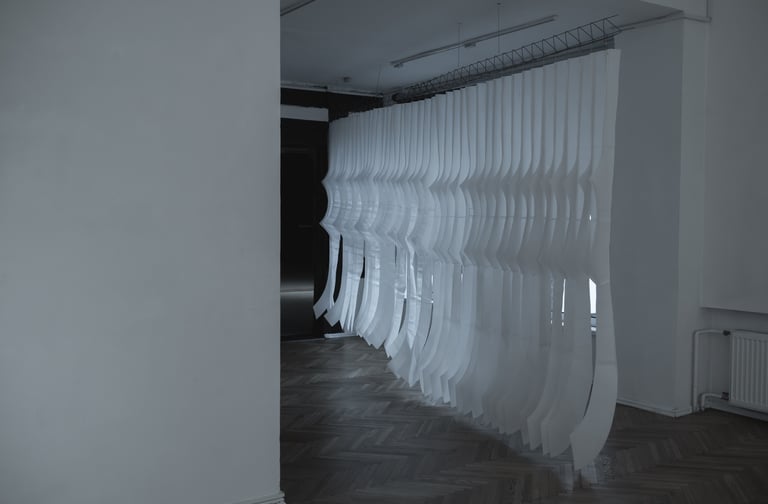
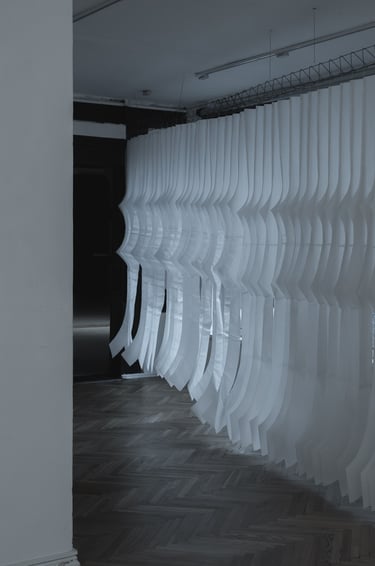
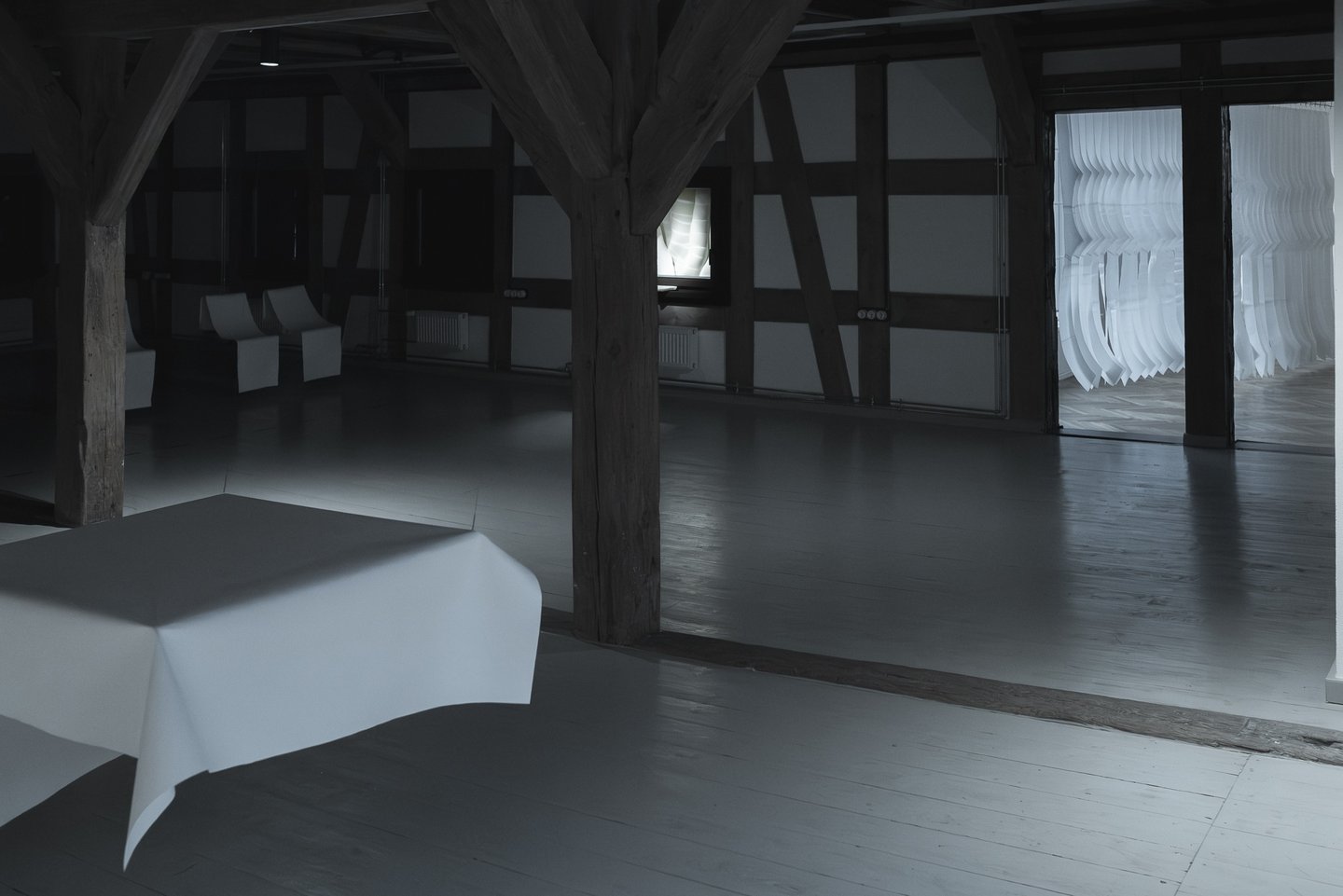
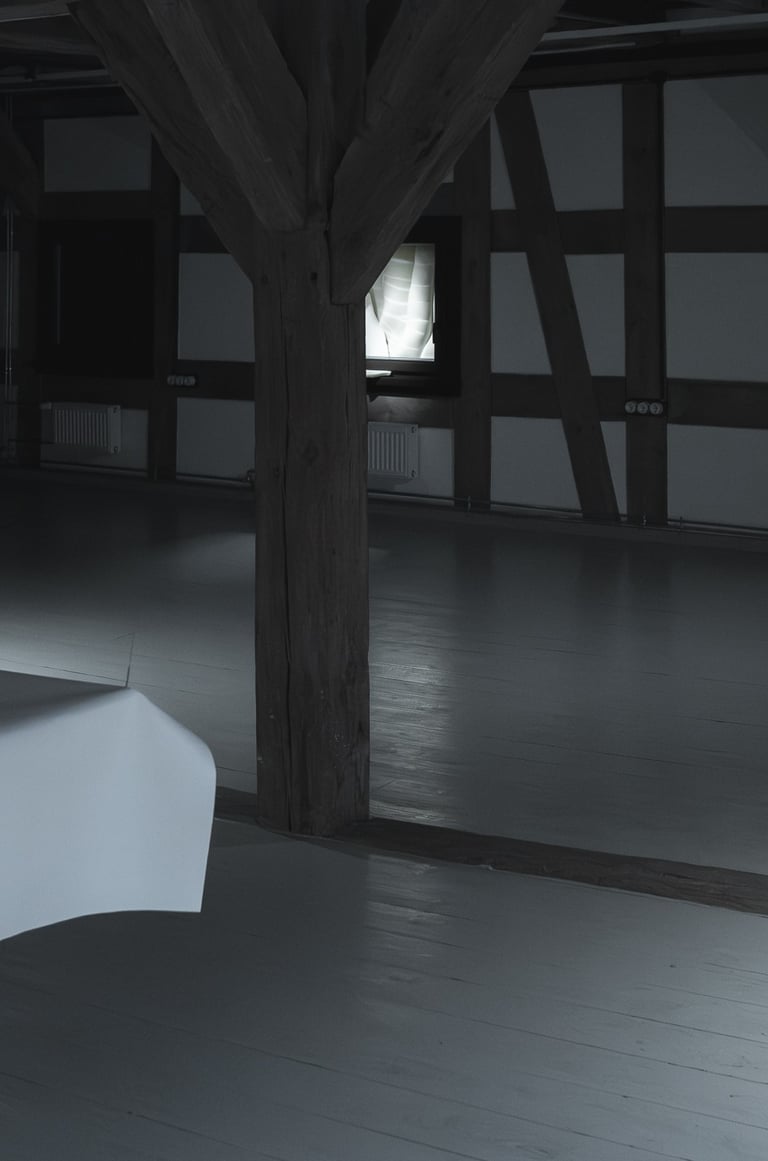
It takes time to transform. Laura Matukonytė’s objects invite an intimate gaze. Questioning and reconstructing the nature of paper, the artist creates a dialogue between material and space, exploring the sensation of (non)presence, desire, and sensuality. Her creative methods include multiplying garment patterns and sewing them into rhythmic systems; shaping cotton-fiber paper through its own weight, water, and everyday household objects. The artist reflects on the domestic environment and the relationship between the proportions of objects and the body. By repeating familiar object scales in her works, she expands the boundaries of how paper as a material is perceived.
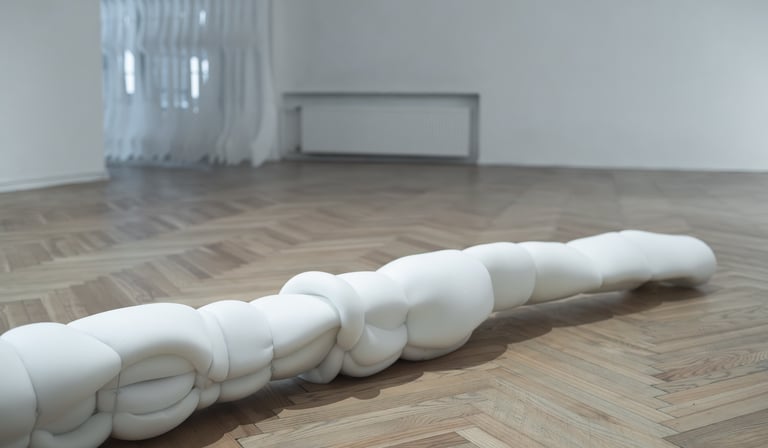
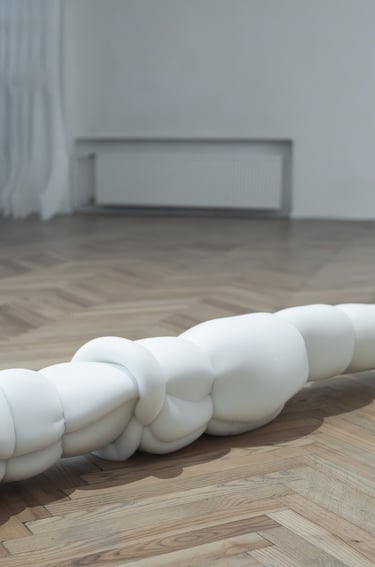
It takes time to attune ourselves. In her practice, Emilija Višinskaitė addresses material composition, its properties, and how it reacts to the environment. Foam filling (polyurethane cellular plastic) is an extremely slow-degrading material. In direct contact with skin, it can cause irritation and allergic reactions. Exposed to ultraviolet light, it yellows and cracks. In constructing sculptural objects, elastic bands are used to cut into the foam and divide it into rhythmic segments. The foam structure is left exposed to the effects of environment, sunlight, and time. Industrial remnants of artificial leather, laser-cut during the production process, become speculative objects that investigate the meaning of material. In this site-specific installation, Emilija Višinskaitė invites reflection on the traces left by experiences of contact.
It takes time to see. The artists’ “thinking hands” create independently existing forms, following the properties dictated by the materials. Paper, foam, and artificial leather raise questions about the tension between interior and exterior, vulnerability, and adaptation.